
If you would like to experience this incredible place and fish with us, please send us an email and/or check it out the trip details here.
My First Experience Of This Marlin on Fly Paradise
I never knew that fly fishing in the Galapagos was even a thing. I had pretty much assumed you couldn’t fish in Galapagos waters at all as it’s a highly-protected marine park.
Somehow it never popped up on my fishing radar; that was until I met Peter Gelfand.
It was my second season guiding at Alphonse Island, Seychelles when Peter hopped on board to try to catch his first sailfish on fly.
Little did I know, Peter spends most of his life traveling from one world class fishing destination to the next, with just 3-4 days at home between trips.
As we got to talking through the day and having caught his first sailfish on fly, he began to tell me about all the awesome places where he had fished (guests tend to open up once they catch what they came for).
You name it, he has been there – French Polynesia, Tonga, the Great Barrier Reef, Patagonia, Belize, Mexico, Panama – the list goes on and on, and then he mentioned the Galapagos Islands.
“Really, you can fish in the Galapagos? I thought it was protected.” He, of course, corrected me and continued to explain that it is probably the best striped marlin fishery in the world.
“What about the inshore fly fishing? Surely there must be some great fishing to be had?” He didn’t seem to know but said he would enquire.
After a week of guiding Peter, he made a wonderful offer, saying “Any trips that I am going on which you’d like to join, just let me know. All you need to do is pay for your flights and the rest is covered.”
Offers like this used to blow me away, but as a guide in a destination like Alphonse, they happened quite often, but they were rarely genuine. However, Peter’s seemed different.
It was a few years later that I got a message from Peter – “Do you want to come fish the Galapagos with me in April?” “Hell yes, I would not miss it for the world,” was my response, of course!
Made famous through Charles Darwin and his theory of evolution, the Galapagos Islands straddle the equator 620 miles off the coast of Ecuador in the Pacific Ocean.
There are a total of 127 islands, islets, and rocks, only 4 of which are inhabited – San Cristóbal, Santa Cruz, Isabela, and Floreana.
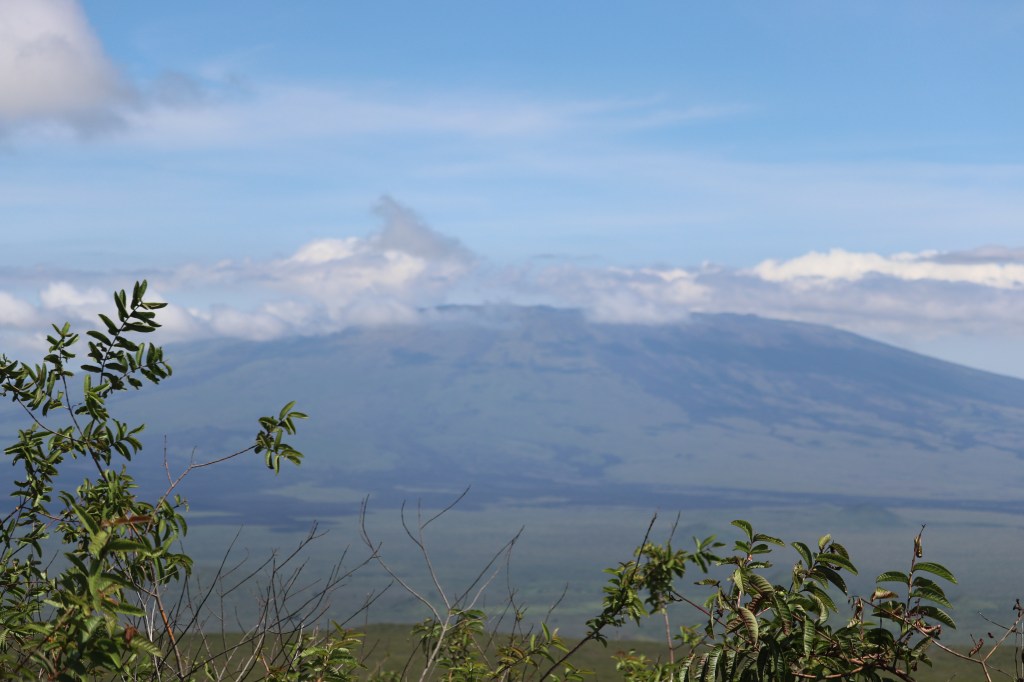
The Galapagos Islands are one of the most volcanically active areas in the world, with 13 active volcanoes, creating the backdrop for stunning landscapes. The volcanoes literally come out of the sea or tower above the islands.
Landing at San Cristobal Airport, it felt like I had stepped back in time.
The island to my surprise was very green and filled with forested hills leading up to the volcano. The coastline was rugged and rocky, with dashes of white sandy beaches, and had hardly any human development.
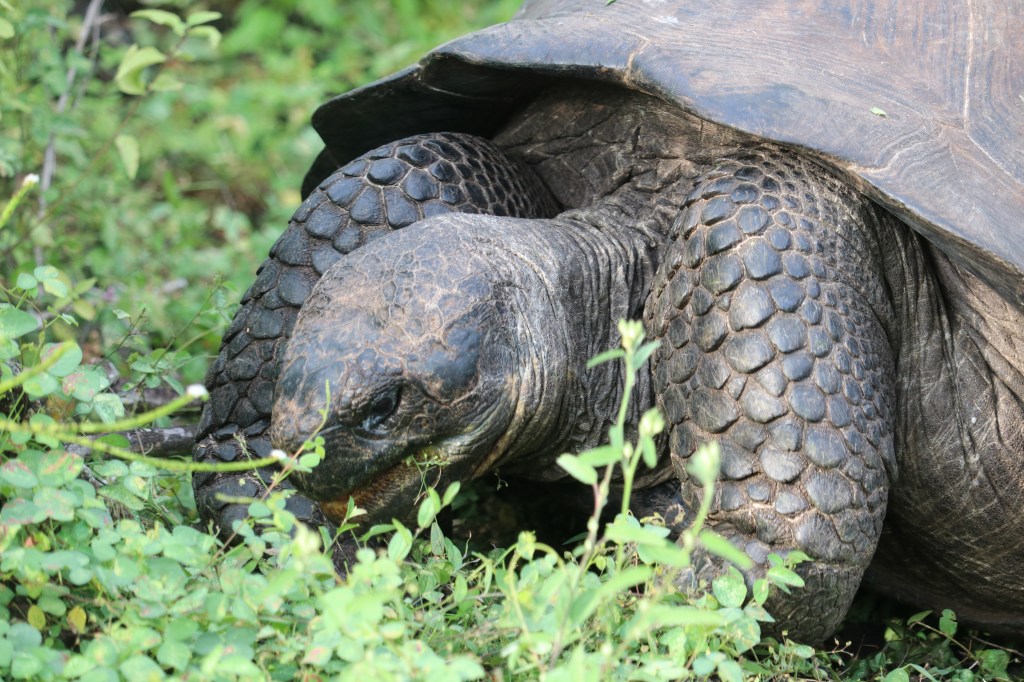
The first thing you notice is that you are surrounded by life! Nothing is scared of humans in the Galapagos Islands as the wildlife has only ever been protected – never hunted.
Having checked into our hotel, I took a stroll along the dock of Puerto Baquerizo Moreno, the main town in San Cristobal, and what I experienced simply blew my mind.
Standing on the dock looking out across the many boats moored up, the sea was alive. Sea lions playing, eagle rays cruising past, turtles popping up for air, and the endemic swimming iguanas were sunbathing on the rocks.
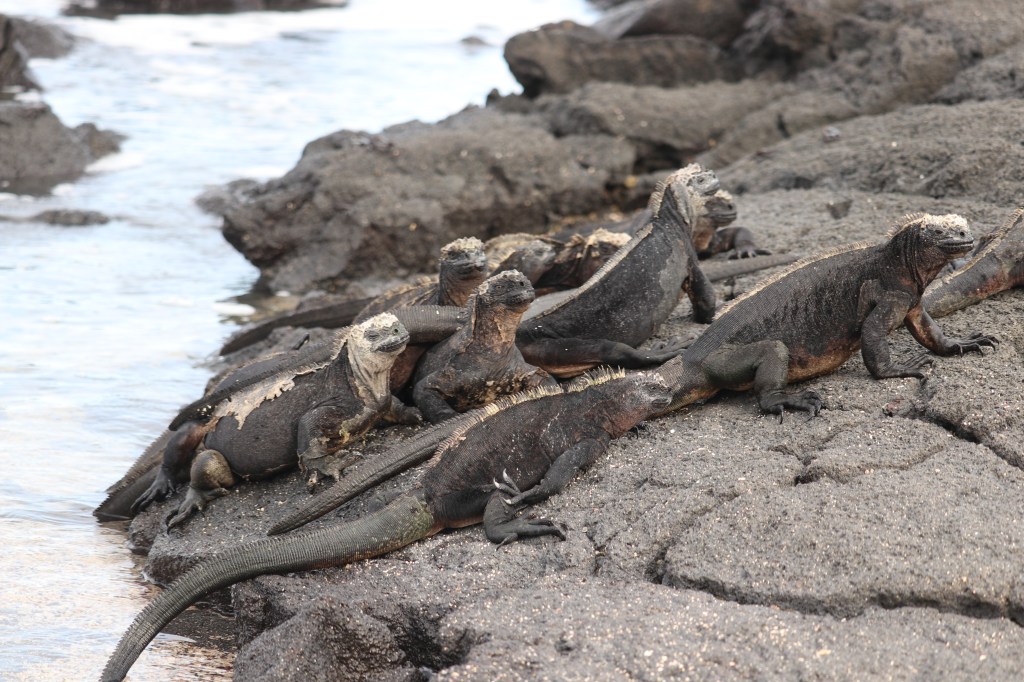
I turned to sit on a bench in the shade to take in what I was seeing, only to notice (just in time), that a sea lion was actually using the bench for its lunchtime nap. I politely moved aside and stood in the sun so as not to wake it.
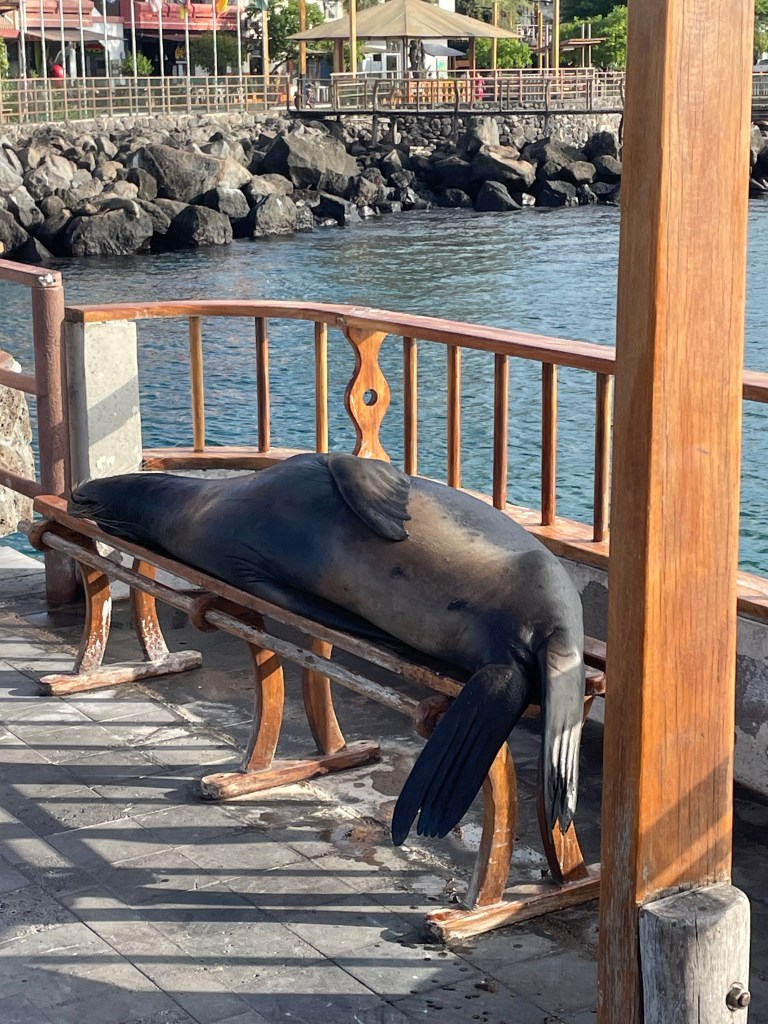
I have never seen a place where humans and wildlife live side by side in such harmony. In a world where this is so rare, it gave me hope, and it is all thanks to how the islands are protected.
In 1959, the government of Ecuador declared 97.5% of the Galapagos Islands land area a National Park, except for areas already colonized. This means the islands have been protected for over 60-years.
In 1986, a new law was passed to control fishing and the over-exploitation of Galapagos marine resources and in 1998 the Galapagos Marine Reserve was created. The reserve runs to 40 nautical miles from the islands’ coasts and was just extended in 2022 adding 30,000 square kms to the ‘no take’ (catch and release) fishing zone.
You can understand why I thought sport fishing in any form in the Galapagos Islands was not possible with such excellent regulations.
The next morning we boarded the “Patricia” to begin 3 days of fly fishing for striped marlin. If you know me, you know I have a thing for marlin and fly rods – I could barely contain myself.
Sitting on the fly bridge with captain Yuri and crew Jairon, we ran the 20 miles to the fishing grounds, and the sea was boiling with life.
There were manta rays finning and flipping, sperm whales breaching, orcas hunting, turtles chilling on the surface, and more dolphins playing and hunting than I have ever seen.

This is what the sea must have been like hundreds of years ago. I wanted to know more about the Marine Park’s rules, so I asked Yuri and Jairon.
The license to fish in the Marine Reserve (catch and release) is around $30,000 per boat per year (these licenses are not easy to come by) plus the Captain & Crew have to be from the Galapagos.
The boat is also tracked by an AIS system linked to the Marine Rangers/Navy so they can see where you are at all times, and fishing time per day is often limited by the Port Authority.
This is fishing conservation done correctly in my eyes and the life around the islands is proof.
After an hour’s ride, we arrived at Española Bank, one of the three banks, along with 0-30 and Rosa Blanca, that hold a lot of striped marlin. The conditions were glassy and flat calm.
Hovering above the bank were hundreds of boobies and frigates on the hunt. Sea lions were hunting and sunbathing all around us.
We put the teasers in the water and the fly rod was ready and waiting on the transom. I paused and said to Jairon, “There is no bait in the teasers?” He smiled and said, “There are so many fish, we don’t need it.”
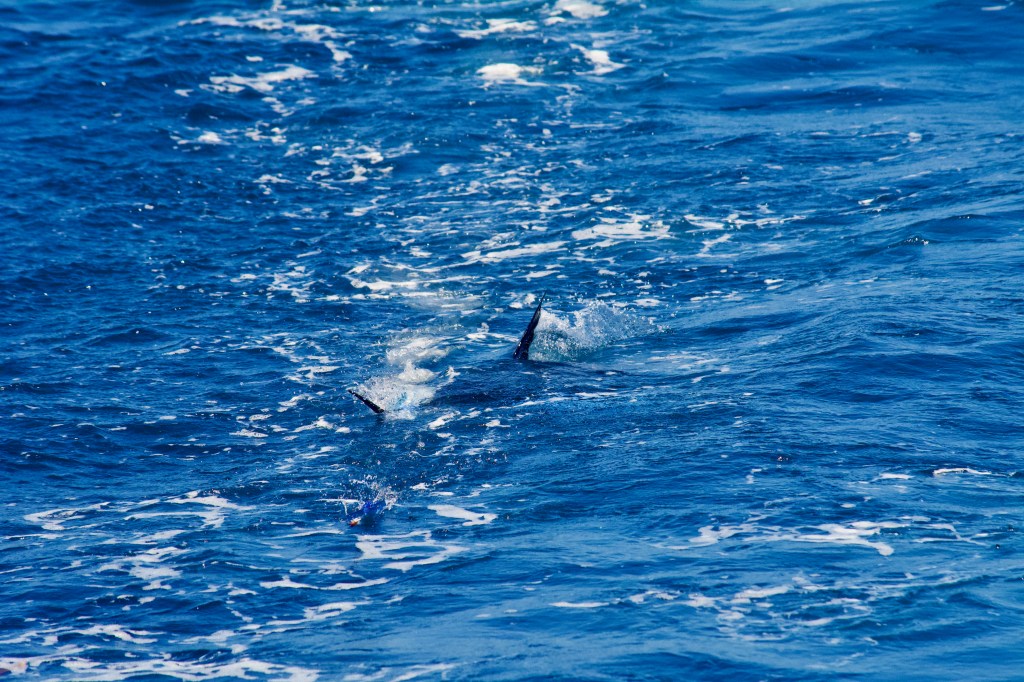
Slightly perplexed, excited, and daunted by this, it took just 5 minutes for the first striped marlin to come on the teaser. Sadly it didn’t switch to the fly and turned off the teaser as soon as we went into neutral to cast the fly.
10 minutes later, another marlin on the teaser – same thing, what was going on? Surely it would change and we would find a hot fish, but it didn’t.
We raised 18 striped marlin that day (a marlin every 20 minutes) and not even one looked remotely interested in the fly. “Maybe bait was needed in the teasers?”
We had to change something and over dinner on the dock at San Cristobal, Peter and I discussed tactics at length. In his words “Wow, in the 9-years I have been coming here I have never seen the fish behave like this.”
The next morning, we started getting very technical on the 1-hour run to Española. I discussed how to tease better with Yuri and Jairon and whether using fewer engines and fishing slower to reduce the wash might help, we came up with a plan.
I even switched the tippet on my fly rod down 20 lbs just in case the fishing gods were shaking their heads while looking down on us. Trying to hook my first marlin on fly on 20 lb tippet was a terrifying thought, I wanted to use 80 lb (non IGFA), but needs must.
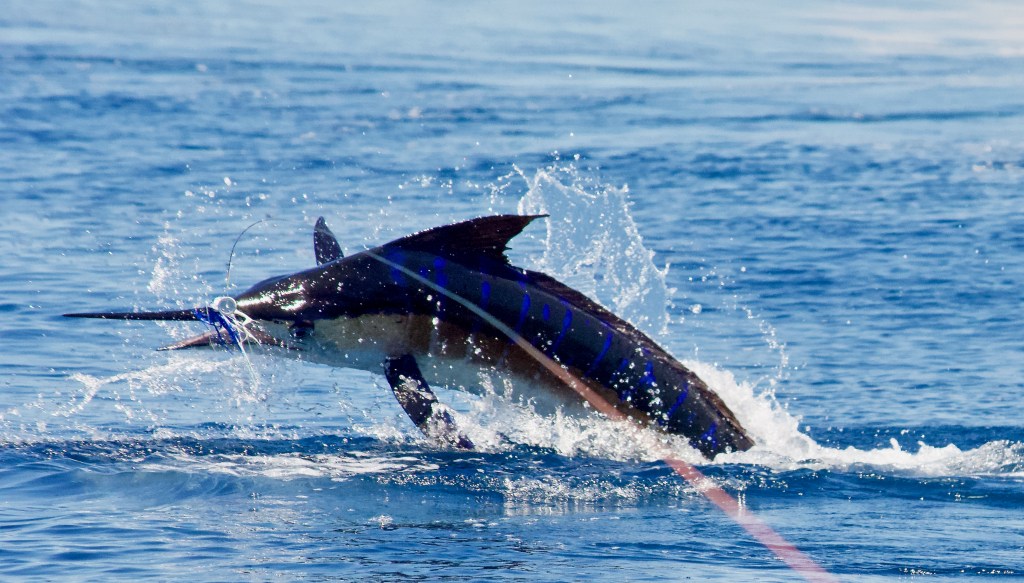
Sure enough, within 2 minutes of pulling teasers the first dorsal came up behind the lure. This stripey was lit up, electric blue from bill to tail and coming in hot.

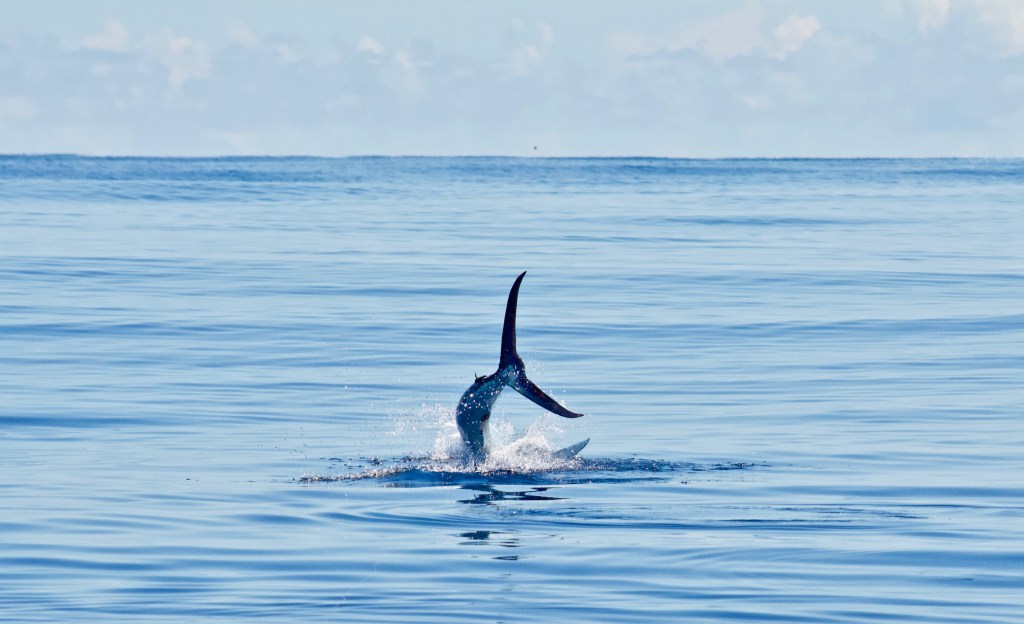
The tease was on point, Peter cast the fly, and we hooked up ‘thank god for that’ is all I could think as the marlin went wild, tailwalking around the boat, only to come off. “Let’s do it again!”
I think 10 minutes passed and two striped marlin came up. I gave the teasing rod to the chef Martin to bring in while I got my fly rod ready, with Peter waiting to take the first shot.
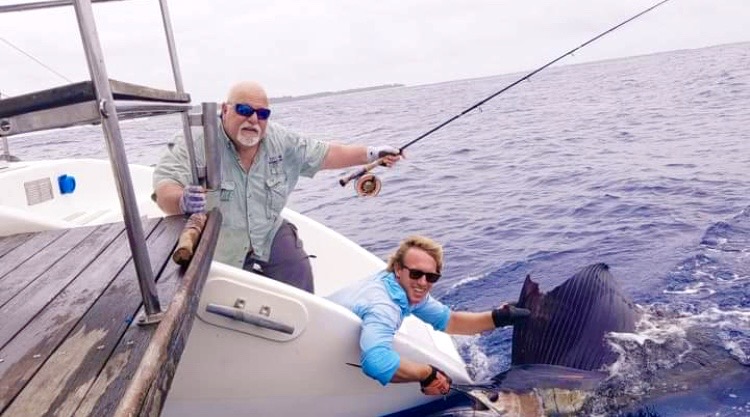
Peter hooked up and I shouted, “There are two, move to the port side”. Taking my fly rod around him, I hooked his shirt on the way, and got my fly line stuch under his feet. We luckily managed to clear everything and I made the shot.
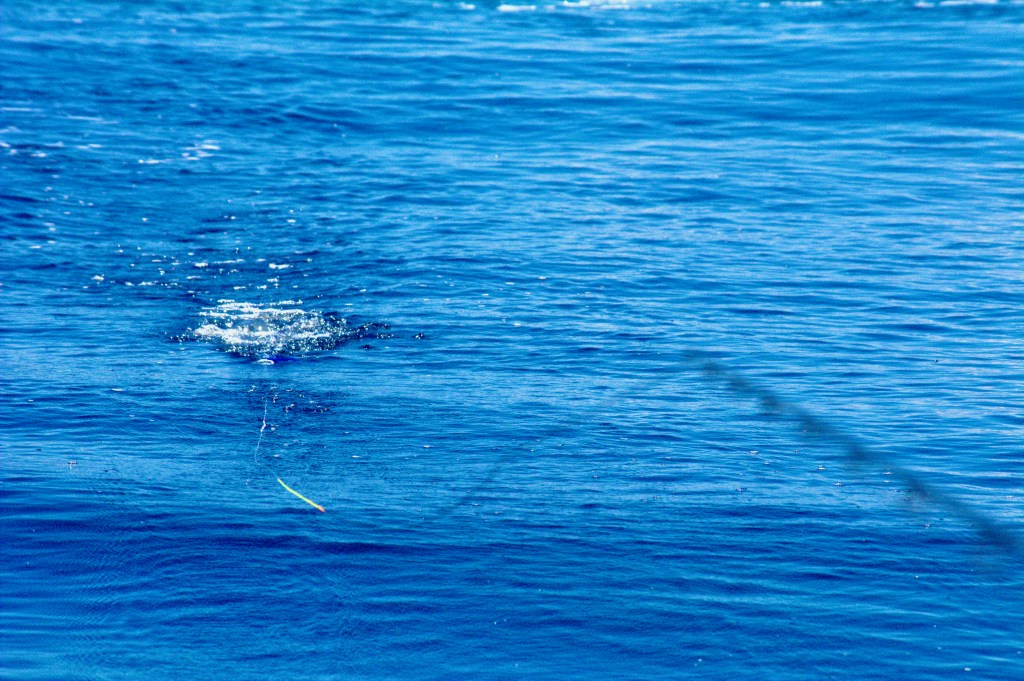
Casting over Peter’s head, between him and the outrigger, my fly ended up 50 ft behind the boat and with three strips, I was hooked up. A double striped marlin on fly, and the first ever in the Galapagos – the whole boat just lost it with excitement.

The day went on and the action never stopped, there was barely even time to eat up the shrimp tempura and octopus ceviche chef Martin had cooked up for lunch.
As we cruised back to San Cristobal, having landed 5 striped marlin on fly between us, I started opening beers and handing them out. The feeling of cruising across the sea after a day like this is indescribable for me.
It is safe to say this was one of the best days of fishing I have ever experienced and one of the best days of my life; it still feels like a dream.

Sitting on the fly bridge celebrating with Yuri, Jairon, and Martin, I asked “Have you guys ever caught a striped marlin on fly?”, “No, never” they all said. Well, we had to do something about that.
I clambered down the ladder to Patricia’s comfortable cabin to talk to Peter and said “These guys have never caught a marlin on fly. Shall we let them do it tomorrow?”.
Peter might be one of the kindest people around and said, “Yes, that’s a great idea but let’s both get one first.” The deal was done!

Something was in the air on the third day. Strolling down the main street in San Cristobal sipping a coffee, the sea just looked different. I met Peter on the dock and, surrounded by sea lions, we chatted about how crazy the fishing had been.
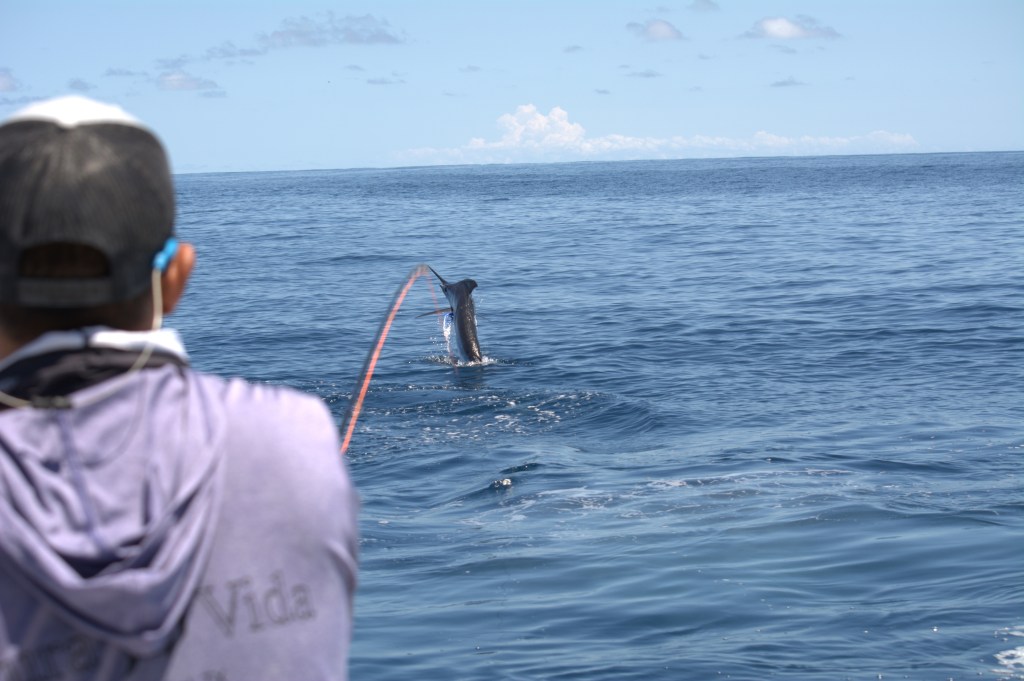
We headed back to Española Bank and within minutes Peter was hooked up. This fish was not having any of it and simply wouldn’t quit.
If you have never fished for billfish on fly, then you might not know that you are 150 yards into your backing in seconds, and you do a lot of reversing to gather the line. Loose braid on a spool is a recipe for a disaster and that is exactly what was coming.
Peter suddenly shouted “The braid is stuck on the reel.” Sure enough, the braid had looped around a part of the reel body. I said to Peter “Give it to me” and to Captain Yuri “Keep reversing and keep up with the fish.”
Now, these situations do not tend to end well. “Jairon, take the rod so I can pop the spool off.” Luckily taking a Mako’s spool off isn’t hard, and when I did, the spool was in a mess of tangles. “Yuri stop reversing” I shouted, as we had to let the fish take all the tangles off the spool.
Picture one person holding a fly rod while another is holding the spool, and a 200lb striped marlin is greyhounding; it is a recipe for a lot of disasters. Tangle after tangle turned into knot after knot as they all flew off the spool, up the eyes and out of the tip of fly rod.
After about 100 yards of braid spun off, we were back on solid ground and it was time to pop the spool back in.
Peter is not a young man and at this point (40 minutes in) said, “I am way too tired, you take over.” I took the fly rod and started fighting the fish, terrified of the knots in the braid and the 20 lb tippet snapping.
As we caught up with the fish, the knots in the braid returned, and were too big to go through the top eye of the fly rod. What’s the plan now?
There was only one – cut and re-tie. Quickly I said, “Jairon grab the rod, Martin bring a knife, and Yuri reverse.” I laugh as I see these words on paper, I just can’t believe it even happened.
Some way, somehow, the braid was cut, retied, the knots were clear, and we were still hooked up to a marlin on fly. You have got to get lucky sometimes! With a few winds on the reel, I explained to the captain – “we can’t come back to this line, we have to land the fish.”
After 1.5 hours we finally landed and released this stunning fish. Peter was standing there in disbelief, shaking his head, laughing, and saying “I can’t believe we got that fish!”
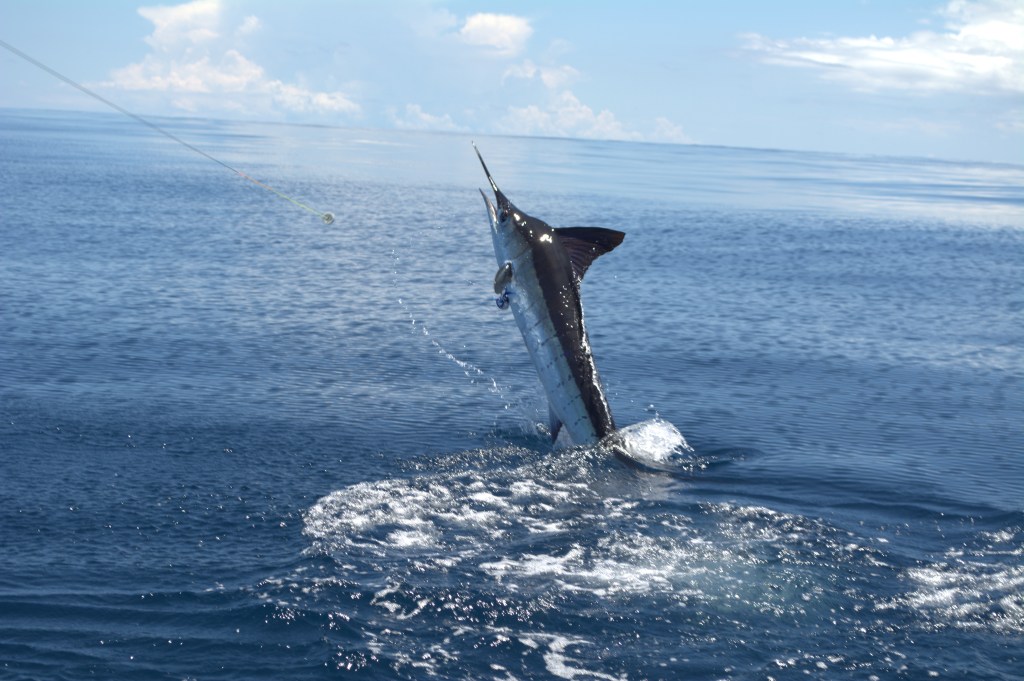
With the teasers back out, it was the crew’s turn. Jairon caught his first marlin on fly, and then Yuri did too, sadly there wasn’t enough time for chef Martin to have a go, next time!
The next day we moved to Isabela Island, the largest island in the Galapagos which is home to giant blue marlin and some great inshore fly fishing.
Isabela is a very different Island from San Cristobal. The island is a lot more relaxed with just 2000 inhabitants compared to San Cristobal’s 7000.
Its huge volcano towers into the clouds, the coastline looks mean with lava like rocks covered in sharp shards, however the long white sand beaches and azure blue seas invite you in.
It honestly feels like you have moved to a different country changing islands in the Galapagos, each one is so unique.
We stayed in Puerto Villamil where the roads are made of sand, the bars run along the beach, and the sunsets are water colors gone mad with a volcano in the background.

Sipping a beer while watching the sun go down and chatting to backpackers from around the world, all I could hear was about the awesome wildlife trips they had been on.
“Have you swum with the hundreds of manta rays yet? What about snorkeling with penguins? I can’t believe you haven’t seen the dancing blue-footed boobies! What are you doing here?”
Slightly jealous and sad that I hadn’t experienced all these things, I replied “I’ve been fishing everyday,” much to their surprise.
Standing on the rooftop of our hotel watching the sunrise light up the volcano, sipping on coffee and smoking a Camel Blue, I couldn’t stop wondering about what we would see today.
Thus begun 4 days of chasing giant blue marlin on conventional – you can read the article about that when I post it in a few weeks.
Winding Up
The Galapagos is by all means one of the most amazing places to visit in the world and an all-around special experience regardless of the fishing.
However, when you take the landscapes, the wildlife, how humans and nature coexist so beautifully, and add in some insane marlin fishing – it is a trip of a lifetime, so much so Peter has chosen to come here every year for the past 11 years.
If you would like to experience this incredible place and fish with us, please send us an email and/or check it out the trip details here
 Uniquely Fly